
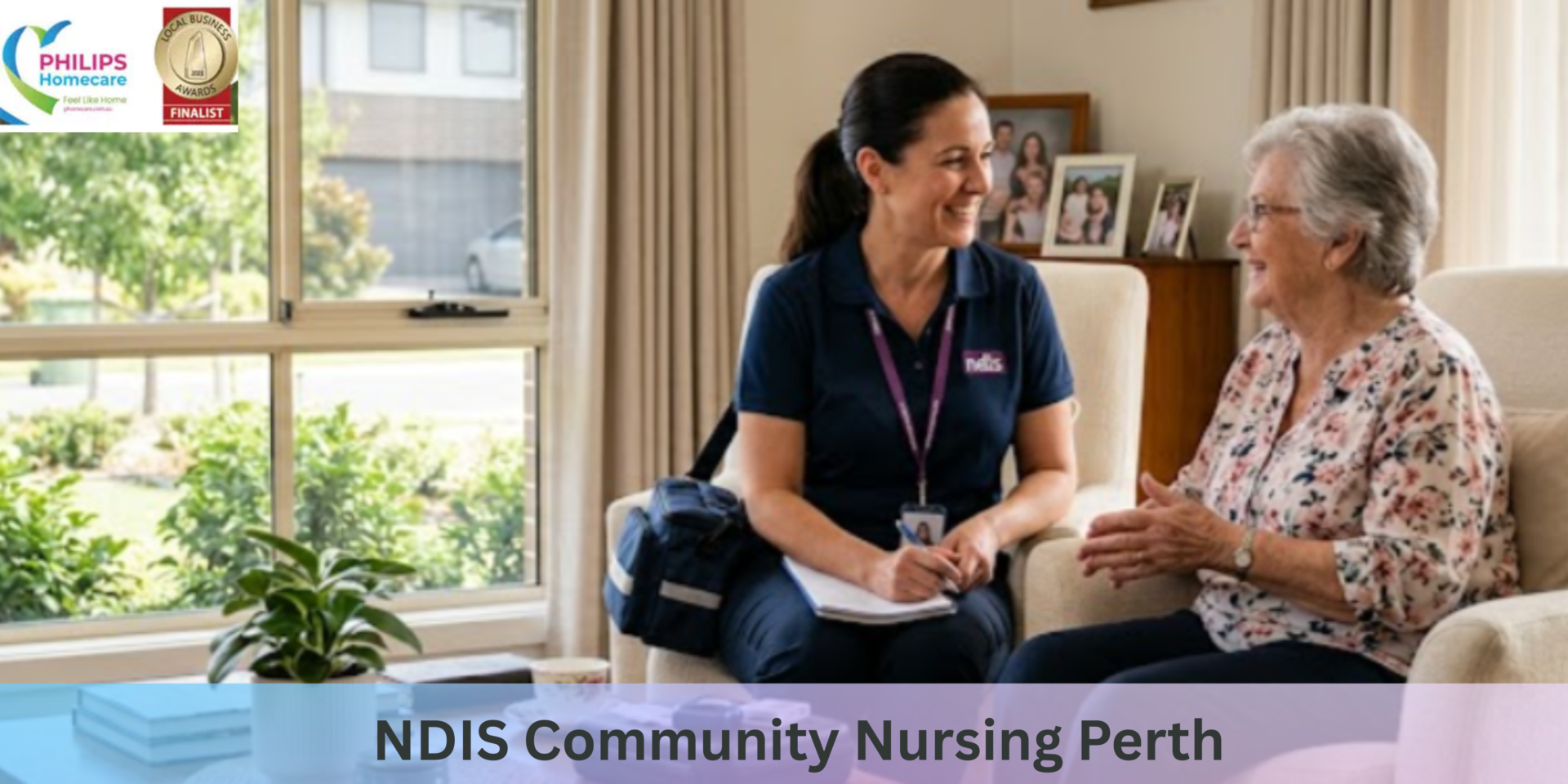
Managing a health condition alongside a disability shouldn’t mean constant trips to a clinic. For NDIS participants across Perth, community nursing brings clinical care into the home — delivered by registered and enrolled nurses who understand both the medical and the NDIS side of your plan. P Home Care now supports participants across the Perth metro area with the same community nursing standard we provide nationally, backed by AHPRA-registered clinical staff.
What NDIS Community Nursing Covers in Perth
Community nursing is an NDIS-funded support that may be included in a participant’s plan when the nursing service relates to their disability-related health needs and meets applicable NDIS funding requirements. Community Nursing Care is listed under Improved Daily Living Skills in the NDIS support catalogue. The specific support and funding available depend on the participant’s individual plan and circumstances :
- Wound care and dressing changes — from minor post-surgical wounds to chronic pressure injuries
- Catheter and stoma management — routine changes, monitoring and troubleshooting
- Medication administration and monitoring, including complex or time-critical dosing
- Continence assessment and ongoing bladder or bowel management plans
- Diabetes management, including insulin administration and blood glucose monitoring
- Tracheostomy and enteral (PEG) feeding support
- Chronic disease monitoring for participants managing multiple conditions
- Post-hospital transition care, reducing readmissions by continuing clinical support at home
Nursing visits are documented in accordance with the participant’s clinical needs, support arrangements and relevant NDIS requirements. Where required and authorised, nurses can coordinate with GPs, specialists and allied health professionals to support continuity of care.
Registered Nurse vs Enrolled Nurse: Who Attends Your Visit
The type of nurse involved will depend on the participant’s clinical needs, the complexity of the support required and the nurse’s scope of practice and competencies. Registered Nurses and Enrolled Nurses can provide different types of nursing support within their professional scope and applicable supervision arrangements.
Registered Nurses may provide assessment, clinical planning and nursing support for participants with more complex health needs, depending on their qualifications and competencies.
Enrolled Nurses may provide nursing care within their scope of practice and under the supervision or delegation arrangements required for the task and clinical setting.
The appropriate clinician and applicable NDIS support item will depend on the participant’s individual circumstances and the service being delivered.
Who Qualifies for Community Nursing Support
You’ll generally be eligible if:
- Your NDIS plan includes funding under Complex Health Care Needs or Higher Intensity Daily Personal Activities
- You have an assessed clinical need — wound care, catheter care, medication management, or a condition requiring regular monitoring
- Your GP, specialist, hospital discharge team or support coordinator has recommended nursing input as part of your NDIS goals
If nursing isn’t yet listed in your plan, your support coordinator or Local Area Coordinator can request it be added at your next plan review, supported by a letter from your treating clinician.
It’s also worth checking whether you need ongoing nursing or a short, defined course of visits — for example, a wound that’s expected to heal within six weeks versus a chronic condition needing indefinite monitoring. This distinction affects how your support coordinator frames the request and how many hours get approved, so it’s worth clarifying with your treating clinician before the plan review rather than after.
What to Expect From Your First Visit
The first appointment is mostly an assessment rather than treatment. A nurse will review your NDIS plan goals, any hospital discharge summaries or GP referral letters, current medications, and the specific clinical task you need support with. From there, they’ll draft a short care plan setting out visit frequency, what each visit covers, and how progress will be reported back to your support coordinator and treating doctors. Most participants find this initial visit runs longer than routine follow-ups — usually 45 to 60 minutes — so there’s time to ask questions and get comfortable with the process before ongoing visits settle into a shorter, more predictable rhythm.
Perth Coverage
P Home Care’s nursing team services participants across greater Perth, including Fremantle, Joondalup, Rockingham, Armadale, Midland and the surrounding metro suburbs, with visits scheduled around participants’ existing medical appointments and routines.
Why Choose P Home Care in Perth
Continuity matters in clinical care — seeing a familiar face reduces anxiety and improves outcomes, particularly for participants managing chronic or complex conditions. P Home Care assigns a consistent nurse (or small team) to each participant wherever possible, keeps care notes aligned with your broader NDIS plan, and works alongside our 24-hour support and personal care services so nursing isn’t delivered in isolation from the rest of your care.
Families often ask how nursing visits interact with other supports already in a participant’s plan — support workers, allied health, or personal care. In practice, the nurse’s care plan is shared with the rest of the support team (with the participant’s consent) so a wound dressing schedule, for instance, doesn’t clash with a support worker’s visit or an OT home modification appointment. That coordination is where a lot of the value sits, particularly for participants juggling several providers at once.
To check what’s already funded in your plan or start the referral process, get in touch with our team or submit a client intake form and we’ll confirm eligibility with you directly.
FAQs
NDIS community nursing is nursing or other qualified health support delivered to a participant in their home or community to address disability-related health needs. Depending on individual circumstances, this can include wound and pressure care, continence support, diabetes management, respiratory care, seizure management, nutrition-related support and other disability-related health supports.
Community Nursing Care is listed under Improved Daily Living Skills in the NDIS support catalogue. Broader disability-related health supports may involve different types of funded supports depending on the participant's needs and plan. The specific support item and funding arrangement depend on the service being delivered and the participant's individual circumstances.
The requirements can vary depending on the participant's circumstances and the type of nursing support required. Supporting evidence from a GP, specialist, nurse or other relevant health professional may help explain the participant's disability-related health needs. If the required support is not currently included in the participant's plan, the participant or their representative can discuss the need and supporting evidence through the relevant NDIS planning or plan-change process.
The appropriate nurse depends on the participant's clinical needs, the task being performed and the nurse's scope of practice, qualifications and competencies. Registered Nurses and Enrolled Nurses can both provide NDIS community nursing supports within their respective scopes and applicable supervision arrangements.
Our nursing team covers the greater Perth metro area, including Fremantle, Joondalup, Rockingham, Armadale and Midland, with visit times built around each participant's existing routine.