
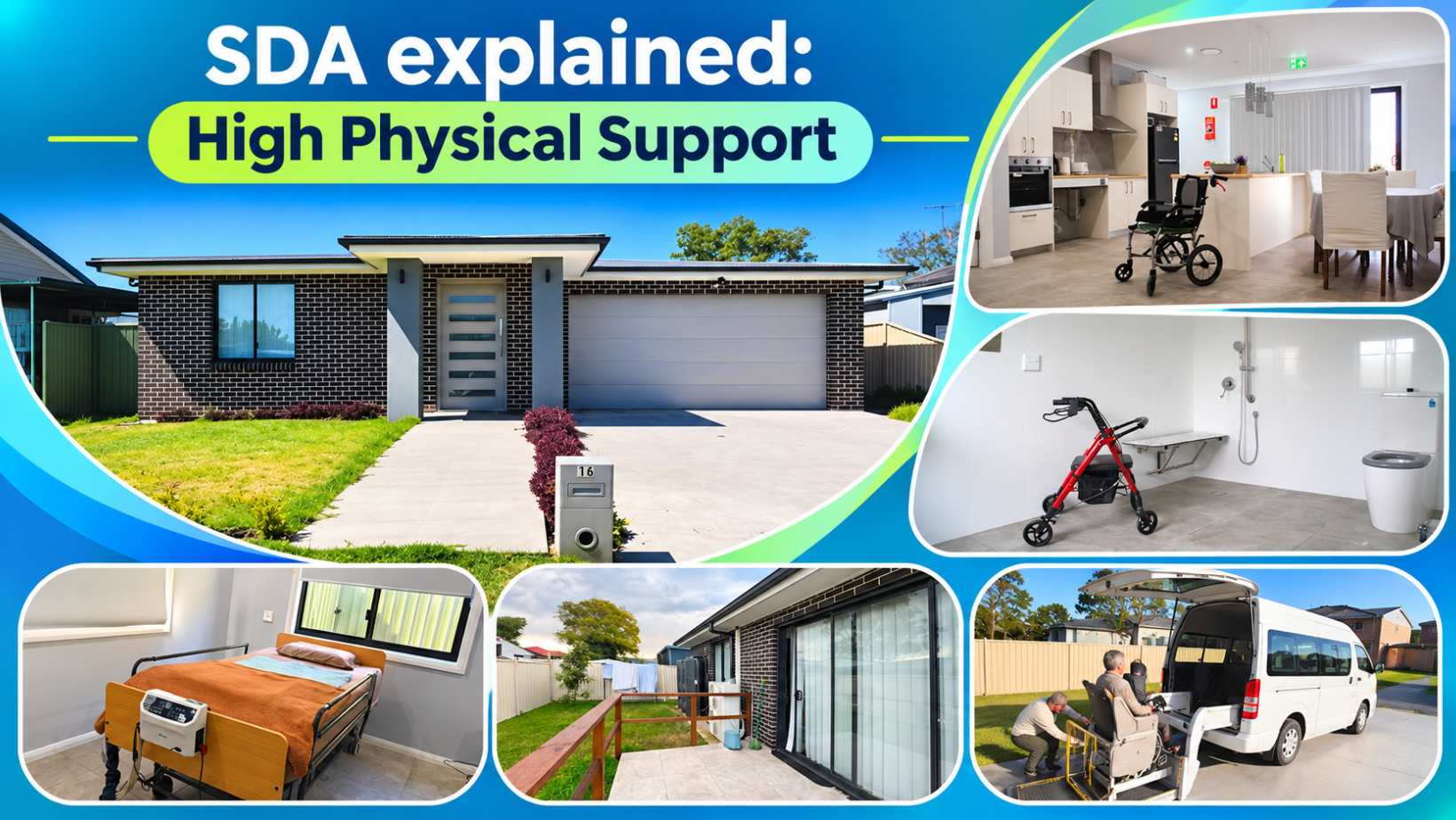
People can live within a property that is both appropriate and provides them with an environment in which they can live comfortably, safely and carry out daily tasks. Although conventional properties are available, they may not always be suitable for those who need SDA high physical support. Specialist Disability Accommodation (SDA) can therefore be of benefit.
Specialist Disability Accommodation (SDA) is housing designed for eligible NDIS participants who have extreme functional impairment or very high support needs. These homes incorporate specialised design features to improve accessibility, safety and everyday living. Participants may also require separate funding for SIL or other support services within their home
Understanding the Different SDA Design Categories
SDA homes are designed according to the needs of people with different types of disabilities. The NDIS recognises four main design categories for new SDA funding.
Each category has different features to support participants with their individual requirements.
1. High Physical Support
SDA high physical support provision is for those with severe physical disabilities and requires a high level of care. It offers enhanced facilities so that service users can easily move and utilise key resources. In addition it provides a secure method of receiving care.
Some common features include:
- Ceiling hoists for safe transfers.
- Automated doors and windows.
- Wheelchair-accessible kitchens and bathrooms.
- Emergency backup power systems.
- Home automation and communication technology.
- Accessible spaces for mobility equipment.
- Suitable areas for support workers to provide assistance.
These specialised homes are designed to reduce physical barriers and make daily routines more manageable. Choosing SDA high physical support accommodation can also help participants access their required support in a safe and comfortable environment.
2. Robust SDA
Robust accommodation can be used to support individuals with more complex requirements. Residents and others can sometimes display behaviours which can be both unsafe and result in damage. Therefore, these housing is constructed using robust materials in order to provide a safe living environment.
Common features may include:
- Strong walls and durable surfaces.
- Reinforced doors and fittings.
- Safe and secure outdoor areas.
- Materials that are easier to maintain.
- Specially designed spaces to reduce environmental risks.
- Features that help minimise property damage.
Robust SDA may suit participants who need a carefully planned living environment to manage challenging situations.
The main goal is to create a home that supports the person’s needs while reducing potential risks and improving safety.
3. Fully Accessible SDA
Fully Accessible accommodation is designed for people with significant physical disabilities who need a high level of physical access throughout their home.
These properties are particularly suitable for participants who use manual or powered wheelchairs or have difficulty using steps.
Some common features include:
- Step-free entrances.
- Wider doorways and hallways.
- Accessible bathrooms and toilets.
- Wheelchair-friendly kitchen areas.
- Suitable turning spaces for wheelchairs.
- Accessible pathways between rooms.
Unlike standard homes, Fully Accessible SDA properties are designed to make movement around the house easier.
This type of accommodation can help participants complete everyday activities with greater comfort and independence.
4. Improved Liveability SDA
Improved Liveability accommodation is designed for people with sensory, intellectual or cognitive impairments who may need additional support to understand and use their living environment.
These homes include features that make everyday surroundings easier to recognise and navigate. Improved Liveability accommodation aims to create a comfortable and easier-to-understand environment.
Who Qualifies for SDA Funding Under the NDIS?
Not every NDIS participant automatically qualifies for Specialist Disability Accommodation.
The NDIS generally considers SDA funding for participants who have:
- Extreme functional impairment, or
- Very high support needs.
Participants must also meet the SDA needs requirements and relevant NDIS funding criteria.
Here are some situations where a person may be considered for SDA funding:
- People with Significant Mobility Difficulties
- People Requiring High Levels of Daily Support
- People with Complex Disability-Related Needs
- People Who Need Specialised Housing Features
However, having a disability or needing daily assistance does not automatically mean someone qualifies. The NDIS assesses each person’s functional capacity, support requirements and housing needs before making a funding decision.
Benefits of Choosing P Homecare’s SDA Accommodation
P Homecare recognises that every participant has different needs, preferences and living goals. Our aim is to help individuals and families better understand disability support and accommodation options so they can make informed decisions.
Some important benefits include:
- Greater Independence: Suitable home features can make everyday activities easier to manage.
- Improved Safety: Specialised designs can reduce physical barriers and certain safety risks.
- Better Accessibility: Participants can move around their homes more comfortably.
- Suitable Support Environment: The property can make it easier for support workers to provide assistance.
- Improved Comfort: A home designed around individual needs can support a more comfortable lifestyle.
- Personal Choice: Participants can explore accommodation options that better match their preferences and goals.
For participants with significant physical disabilities, SDA high physical support housing can provide important accessibility features that may not be available in standard residential properties.
Final Thoughts
Special Disability Accommodation can offer a suitable living environment to those who have severe functional difficulties, or substantial care requirements. There are various types of SDA available, each offering distinctive benefits such as enhanced access, long lasting properties and specialist physical care provision.
Understanding SDA high physical support and other housing options can assist people to determine which housing may best meet their needs. If you are researching SDA housing vacancies in Sydney it is also important to become familiar with NDIS criteria, housing facilities and your own support requirements.
P Homecare is here to help you better understand your disability accommodation options and take informed steps towards finding a suitable living environment.
Frequently Asked Questions
How Does the NDIS Decide Which SDA Category Is Suitable?
The NDIS considers a participant’s functional impairment, support requirements, housing circumstances and individual needs when assessing eligibility for Specialist Disability Accommodation.
If a participant meets the SDA eligibility requirements, the NDIA considers the design features that may be appropriate for their circumstances. These may include Improved Liveability, Fully Accessible, Robust or High Physical Support.
For example, someone who requires significant wheelchair accessibility and very high levels of physical assistance may be considered for High Physical Support SDA. Someone with sensory or cognitive impairments may benefit from Improved Liveability features.
The final decision depends on the participant’s individual circumstances, supporting evidence and applicable NDIS funding criteria.
What is the difference between SDA High Physical Support and Fully Accessible housing?
Both High Physical Support and Fully Accessible SDA are designed for people with significant physical impairments. However, they have different design requirements.
Fully Accessible SDA provides a high level of physical accessibility throughout the home. This may include accessible entrances, wider circulation spaces, suitable bathrooms and wheelchair-accessible kitchens.
High Physical Support SDA includes a high level of physical accessibility for people who require very high levels of support. Depending on the dwelling’s design, additional features may include structural provision for ceiling hoists, emergency power solutions, assistive technology readiness and home automation.
The appropriate category depends on the participant’s functional abilities, physical support requirements and housing needs.
What About the Basic SDA Category?
Basic is a recognised SDA category within the broader NDIS SDA framework, but it is not one of the four design categories used for new SDA design-standard funding.
It generally relates to certain existing or legacy SDA arrangements. Basic SDA homes may have fewer specialist design features than categories such as Fully Accessible or High Physical Support, although their location and other characteristics may still support the needs of eligible participants.
Participants exploring SDA should check the property’s actual enrolment category and features before making accommodation decisions.
Which factors should be considered while exploring SDA High Care Housing Options?
Choosing suitable SDA accommodation requires careful consideration of the participant’s individual requirements and future needs. Some important factors include:
- SDA eligibility: Confirm that the participant meets the relevant NDIS SDA requirements and has appropriate funding.
- Design category: Identify whether Improved Liveability, Fully Accessible, Robust or High Physical Support best matches the participant’s needs.
- Accessibility: Consider wheelchair access, bathroom facilities, doorways, circulation spaces and other relevant features.
- Assistive technology: Check whether the property has suitable provisions for equipment such as ceiling hoists, automation and communication technology.
- Support arrangements: Consider whether separate SIL or other support services will be required.
- Location: Think about access to family, community activities, healthcare and other important services.
- Property features: Confirm that the actual dwelling is enrolled as SDA and that its design category matches the advertised information.
- Future requirements: Consider whether the property can continue to meet the participant’s needs if their circumstances or support requirements change.
Discussing these factors with the relevant professionals and accommodation provider can help participants and families make a more informed decision.

Add Comment